
Statement on International Anti-Corruption Day 2025
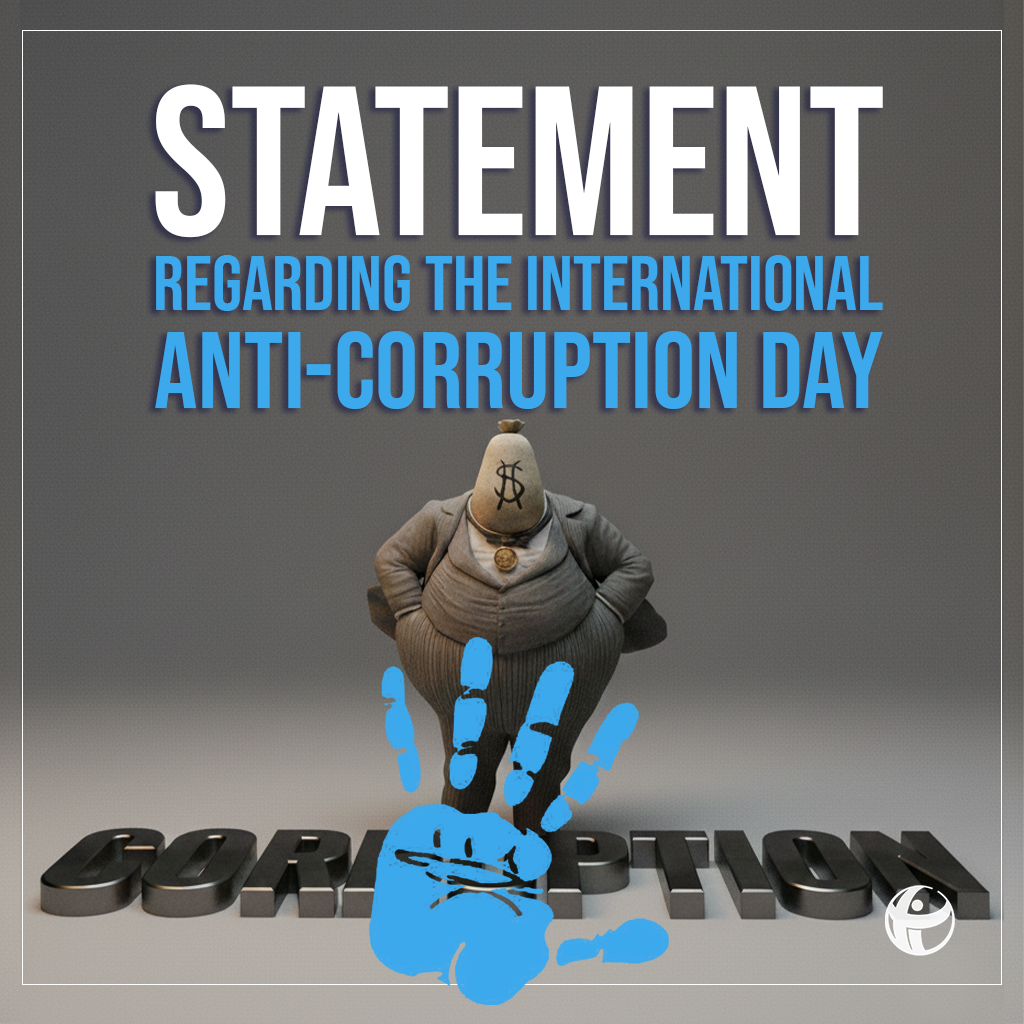
December 9 is the International Anti-Corruption Day. At the end of 2025, the situation in the country in terms of corruption is particularly worrying: Georgia has become a captured, kleptocratic state.
In such countries, the sole goal and motivation of the ruling elite is personal enrichment, which is achieved by robbing citizens and the state. The resources accumulated through corruption, in turn, are used to maintain power.
The governance of Bidzina Ivanishvili, who heads the captured state, is based on a specific group of people engaged in corruption, whom he allows to enrich themselves through corruption and then uses them to subjugate state institutions and maintain his power.
This means that, in the future, an increase in corruption and the damage caused by it is expected.
More specifically, the challenges facing the country in terms of corruption are as follows:
- The process of state capture is complete – there is no independent state body that could openly talk about corruption and take real action against it.
- Kleptocracy is on the rise – the number of documented cases of elite corruption, their nature, and the identities of persons involved indicate the systemic nature of high-level corruption.
- A sham fight against corruption is underway – investigative bodies serve the internal conflicts and divisions of the ruling party, targeting the party’s former members alone, while hundreds of documented cases of elite corruption are ignored.
- The Anti-Corruption Bureau is being abolished – an agency created just 3 years ago to prevent corruption has turned into a repressive mechanism against the non-governmental sector instead of fighting corruption. Now, about to be abolished, the Anti-Corruption Bureau is leaving all of its main anti-corruption functions in a worse state compared to the start of its tenure: monitoring of asset declarations of officials, monitoring of political finances, development of a national anti-corruption strategy, participation in international anti-corruption platforms, protection of whistleblowers, control of conflicts of interest.
- International anti-corruption commitments and recommendations are ignored – 1. Georgia demonstrably opposes the anti-corruption conditions set by the European Commission; 2. The same is true of GRECO’s main anti-corruption requirements; 3. The country has withdrawn from important international anti-corruption processes, such as the OECD Anti-Corruption Network and the Open Government Partnership (is under review).
- The country has not had a National Anti-Corruption Strategy for 5 years – in other words, for more than 5 years, no one at the level of state institutions has thought about what corruption risks exist in the country and what should be done to reduce them.
- Cooperation between state institutions and the civil society has been prohibited at the legal level – civil society, which is an integral part of the successful fight against corruption, especially elite corruption, is being persecuted and brought to the brink of destruction. The involvement of civil society in decision-making processes has been abolished at the legislative level, which directly contradicts the UN Convention Against Corruption.
In order for Georgia to be able to effectively fight corruption, the democratic system must be restored in the country and a real process of building independent institutions must begin. Transparency International Georgia continues to work towards this goal.
